Should Marijuana Be Legalized
📅 2026 Update: Key Changes in Marijuana Legalization
Since the original article was written, there have been significant developments in marijuana laws across the United States. New legislation has been proposed, and federal agencies have made important decisions regarding marijuana's legal status. The earlier article continues further down this page, providing foundational information on this topic.
🗓️ Recent Legislative Changes
On July 16, 2026, the U.S. Senate reintroduced the Cannabis Administration and Opportunity Act (CAOA). This act aims to federally decriminalize marijuana by removing it from the Controlled Substances Act (CSA).
If passed, this could lead to nationwide legalization.
⚖️ Rescheduling Marijuana
On April 23, 2026, the Department of Justice (DOJ) and Drug Enforcement Administration (DEA) issued an order to reschedule FDA-approved marijuana products and state-regulated medical marijuana products to Schedule III of the CSA. This change recognizes their medical use and lower potential for abuse.
💬 Public Support
A poll conducted in 2025 showed that 68% of Americans support making marijuana legal. During the public comment period for the DOJ's proposed rule to reschedule marijuana, over two-thirds of comments favored decriminalization or descheduling. This reflects a growing public consensus on the issue.
🏥 Impact on Medical Marijuana
As of January 2026, marijuana was legal in 40 states for medical use. The recent rescheduling under the CSA not only supports medical use but also provides tax relief for state-licensed medical marijuana businesses. This could lead to better access for patients who rely on marijuana for treatment.
📌 Key Takeaways
- The Cannabis Administration and Opportunity Act aims to decriminalize marijuana federally.
- Marijuana products were rescheduled to Schedule III, acknowledging their medical use.
- 68% of Americans support legalization, indicating strong public support.
- 40 states now permit medical marijuana, enhancing patient access and support.
- Recent changes aim to address tax relief for medical marijuana businesses.
💡 Tips for Navigating Marijuana Laws
Review details of your specific situation with your attorney to ensure you understand your options.
🗣️ Know Your State Laws
Each state has different laws regarding marijuana use. Familiarize yourself with your state's regulations to avoid legal issues.
💼 Understand Medical Use Eligibility
If considering medical marijuana, check if you meet your state’s eligibility requirements. Many states have specific conditions that qualify for medical use.
📄 Keep Track of Changes
Marijuana laws are evolving. Stay updated on both federal and state changes that could impact your rights and access to marijuana.
🔍 Research Local Resources
Look for local resources or advocacy groups that can provide support. These organizations often have valuable information regarding laws and access.
🛡️ Be Aware of Criminalization
Despite recent changes, marijuana remains criminalized under the federal law for certain uses. Be cautious and informed about your actions regarding marijuana.
🏆 Free Options Ranked by User Reviews (2026)
Currently, no national paid service in this area meets the review threshold, so this section includes free government and nonprofit resources that provide support related to marijuana laws.
🥇 1. Drug Policy Alliance
The Drug Policy Alliance offers research and policy recommendations on marijuana legalization. Their reports emphasize public health and safety principles surrounding marijuana use, making them a valuable resource for understanding current laws and proposed changes.
🥈 2. Partnership to End Addiction
The Partnership to End Addiction focuses on protecting youth in the context of marijuana legalization. Their reports provide research-based recommendations and guidelines for safe marijuana use, especially for younger populations.
🥉 3. Marijuana Justice Coalition
The Marijuana Justice Coalition advocates for comprehensive federal marijuana reform. They focus on descheduling marijuana and addressing criminal justice issues related to marijuana offenses.
4️⃣ Overdose Prevention Centers
States like Rhode Island and Vermont have established overdose prevention centers to help those struggling with drug use. These centers provide safe environments and resources to prevent overdoses and support recovery.
🔎 What to Check Before Paying for Help
- 🌱 Verify the credentials of any organization you consider.
- 📊 Look for user reviews and testimonials.
- ⚖️ Ensure that the service complies with local laws.
- 🏛️ Check if the organization is nonprofit or government-funded.
❓ Frequently Asked Questions
❓ What are the current penalties for marijuana possession?
Penalties for marijuana possession vary by state. While many states have decriminalized or legalized marijuana, federal law still imposes penalties for possession.
🌎 How many states have legalized recreational marijuana?
As of January 2026, 24 states have legalized marijuana for recreational use. This number may change as more states consider legalization.
🏥 Can I get medical marijuana for chronic pain?
Many states allow medical marijuana for chronic pain. However, you must meet specific eligibility requirements, which may vary by state.
📋 What should I do if I'm arrested for marijuana possession?
If arrested, it is important to remain calm. Contact your attorney as soon as possible to understand your rights and options.
🏛️ What federal changes are expected in the next few years?
The reintroduction of the Cannabis Administration and Opportunity Act could lead to significant federal changes in marijuana laws. Monitoring this legislation will provide updates on potential changes.
🔍 How does the rescheduling of marijuana affect users?
Rescheduling marijuana to Schedule III acknowledges its medical use and could reduce penalties for users. However, it doesn’t change the federal status of marijuana entirely.
⚖️ Recent Cases Related to Marijuana
Several recent court rulings have impacted marijuana laws, reflecting ongoing changes in public policy. These cases highlight the tension between state and federal laws regarding marijuana use and regulation.
- Ohio Court of Appeals affirms drug conviction of DavisOhio Court of Appeals · August 21, 2026
- Ohio Court upholds conviction of Raffael Lawson in drug caseOhio Court of Appeals · August 21, 2026
- Ohio Court of Appeals affirms drug trafficking convictionOhio Court of Appeals · August 21, 2026
- Ohio Court affirms sentencing in drug-related manslaughter caseOhio Court of Appeals · August 21, 2026
For more detailed information, readers can browse more rulings on the news page.
End of October 2026 Update
As with any political and/or social issue, there are both sides of the spectrum in the argument for and against legal marijuana. Both arguments will prove that have very solid points for both the legalization of the drug, as well as keeping the drug as an illicit substance.
There are various factors that are to be considered in the legal marijuana debate, though one of the strongest and most analyzed will be medicinal marijuana. The medical use of marijuana has proven to be an important factor in the debate for legal marijuana, though there are also strong arguments against it.
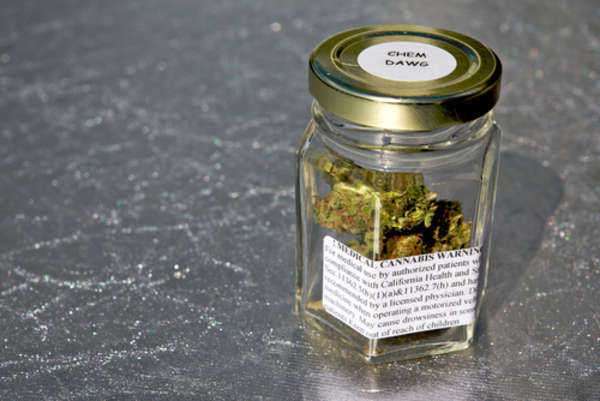
Those that for legal marijuana will often state the fact that marijuana is relatively harmless when compared to other substances that are currently legal, namely tobacco and alcohol. When compared to chronic abuse of these other two substances, marijuana will prove to be much less detrimental to one's health.
Furthermore, it has also proven that medical marijuana has proven beneficial as a therapeutic option for those suffering of certain diseases and conditions, namely cancer, AIDS, and even glaucoma. Legal marijuana would allow people with these illnesses to have access to a potentially positive treatment option.
Arguments against both legal marijuana and medicinal marijuana will point to the fact that the use of marijuana has time and again proven to lead to other more harmful and addictive drugs, hence its reference to being the "gateway drug." Furthermore, medicinal marijuana research has not necessarily distinctly or concretely proven how safe and effective the drug can be when used for medical purposes.
To further the argument, in allowing medicinal marijuana to be used, the recreational use of the drug will prove to be next thing to be argued, which will pose another set of pros and cons all together. Ultimately, the debate for legal marijuana will prove to continue until one side can substantially prove its side without dispute.