4 Facts about Drugs that You Need to Know
📅 2026 Update: Changes in Drug Laws and Policies
Since the original article was published, there have been significant changes in U.S. drug laws and policies. These updates affect marijuana scheduling, addiction treatment initiatives, and federal penalties for drug offenses. This section summarizes the most relevant changes related to drugs and their legal implications.
🌿 Marijuana Rescheduling Efforts
In May 2024, the Drug Enforcement Administration (DEA) proposed a change to marijuana’s classification. They suggested moving it from Schedule I to Schedule III. This change recognizes marijuana's medical use and acknowledges its lower potential for abuse.
As of October 2026, this process is still ongoing, with administrative hearings planned to discuss this important topic.
🤝 Great American Recovery Initiative
On January 29, 2026, President Biden initiated the Great American Recovery Initiative. This program is designed to prioritize addiction treatment and recovery services across the country. It aims to provide resources for individuals struggling with substance use disorders, marking a significant step in national drug policy.
💰 Federal Penalties for Drug Offenses
The penalties for drug offenses remain severe. Under 21 U.S.C. § 960, individuals caught importing or exporting controlled substances may face fines up to $10 million for individuals and $50 million for organizations. These penalties highlight the serious legal consequences of drug trafficking.
📝 Prescription Requirements for Schedule II Substances
According to 21 U.S.C. § 829, prescriptions for Schedule II controlled substances must be written by a qualified practitioner. This regulation ensures that these powerful medications are prescribed responsibly, reducing the risk of misuse.
📌 Key Points Summarized
- 🌿 Marijuana may be rescheduled from Schedule I to Schedule III.
- 🤝 The Great American Recovery Initiative focuses on addiction treatment.
- 💰 Federal penalties for drug offenses remain high.
- 📝 Schedule II substances require written prescriptions.
- 🔒 Unlawful drug users cannot possess firearms under federal law.
💡 Tips for Understanding Drug Laws
Review the details of your own situation with your attorney. Understanding drug laws can be complex, especially with recent changes impacting various aspects of drug policy.
📜 Understand Prescription Validity
Prescriptions for Schedule II substances cannot be refilled. They are valid only for a limited time, as set by federal regulations. This limitation is crucial for ensuring that these substances are used safely and effectively.
🔍 Keep Up with Marijuana Laws
Stay informed about the ongoing changes to marijuana scheduling. The proposed shift to Schedule III may affect access and regulations surrounding medical marijuana in the future.
🏛️ Know Your Rights Under Federal Law
Individuals who are unlawful users of controlled substances are prohibited from possessing firearms. Understanding this law can help individuals avoid legal complications related to firearm ownership.
📅 Be Aware of National Drug Control Strategy Deadlines
The President must submit a National Drug Control Strategy to Congress every two years. This strategy outlines the government's approach to drug control and can influence future legislation and funding for addiction treatment.
💡 Utilize Available Resources
The Great American Recovery Initiative provides resources for addiction treatment. Individuals and families seeking help should explore the support available through this program.
🏷️ Recognize the Consequences of Drug Offenses
Federal penalties for drug offenses can be significant. Being aware of these penalties can help individuals understand the seriousness of drug-related crimes.
🏆 Services Ranked by User Reviews (2026)
This section features services related to drug law compliance and addiction support. The companies listed have been evaluated based on user reviews as of October 2026. Ratings can change over time, and star ratings are one of many signals; more unhappy customers often leave reviews, which can skew perceptions.
🥇 1. Day Translations
Day Translations has been rated 4.7. They are known for providing professional interpreting services and HIPAA-compliant language solutions. However, their primary focus is on interpretation rather than document preparation, which may not suit all users' needs.
🥈 2. En-Vision America
En-Vision America holds a Trustpilot score of 4.5. They specialize in accessible prescription labeling solutions and innovative pharmacy technologies. Their services mainly cater to pharmacies rather than individual consumers, which could limit their accessibility for some users.
🥉 3. RushTranslate
RushTranslate has an impressive Trustpilot score of 4.8. They offer certified pharmaceutical translation services, ensuring regulatory compliance for the pharmaceutical industry. However, their services are primarily limited to the pharmaceutical sector, which may not address broader legal or addiction treatment needs.
🆓 Free Addiction Treatment Resources
The Great American Recovery Initiative aims to provide resources and support for addiction treatment. This initiative can help individuals seeking assistance with substance use disorders, connecting them with treatment options and support services.
🔎 What to Compare When Choosing Services
- 📊 User ratings and reviews.
- 📋 Range of services offered.
- 🏷️ Specialization in drug law or addiction support.
- 💲 Pricing and potential costs.
- 🌍 Availability of services in your region.
❓ Frequently Asked Questions
❓ What is the current status of marijuana rescheduling?
The DEA proposed rescheduling marijuana from Schedule I to Schedule III in May 2024. As of October 2026, this process is still ongoing, and administrative hearings are scheduled to discuss the matter.
🔒 Can unlawful drug users own firearms?
No, individuals who are unlawful users of controlled substances are prohibited from possessing firearms under 18 U.S.C. § 922(g)(3). This law is important for maintaining safety and reducing risks associated with substance abuse.
📋 What are the fines for drug trafficking?
Under 21 U.S.C. § 960, individuals convicted of importing or exporting controlled substances may face fines up to $10 million for individuals and $50 million for organizations. These penalties reflect the serious legal consequences of drug trafficking.
🏛️ How often must the National Drug Control Strategy be submitted?
The President is required to submit a National Drug Control Strategy to Congress every two years. This submission helps shape national drug policy and funding for treatment programs.
💊 What are the requirements for Schedule II prescriptions?
Schedule II controlled substances require a written prescription from a licensed practitioner, according to 21 U.S.C. § 829. This ensures that these powerful medications are prescribed responsibly.
🤝 What resources are available for addiction treatment?
The Great American Recovery Initiative, launched in January 2026, aims to provide resources and support for addiction treatment across the nation. Individuals should explore these options for assistance with substance use disorders.
⚖️ Recent Cases Related to Drug Laws
Several recent court rulings have addressed issues related to drug laws and penalties. These cases can provide insights into how laws are applied and interpreted in practice.
- Wisconsin Court Upholds Evidence Suppression in Drug CaseCourt of Appeals of Wisconsin · October 20, 2026
- Court upholds drug and firearm convictions of BazemoreCourt of Appeals of Virginia · October 20, 2026
- Virginia court upholds conviction of man for drug, firearm offensesCourt of Appeals of Virginia · October 20, 2026
- Court affirms conviction of Willie Boone for drug crimesCourt of Appeals for the Eleventh Circuit · October 20, 2026
For further updates, browse more rulings on the news page.
End of October 2026 Update
The Definition of Drugs
The term ‘drugs’ is one commonly used to define the wide range of pharmaceuticals that exist; pharmaceuticals are classified as any type of substance that adjusts, alters, or modifies physiological behavior and activity; the chemical makeup of the vast expanse of drugs – both legal and illegal, have been manufactured in order to specifically target certain areas of both the physical body or the neurological system, which is comprised of the human brain and central nervous system.
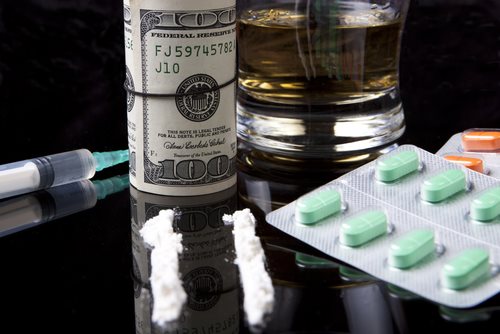
While some illegal and controlled substances are organic and natural in their purest state, other drugs are synthetic in nature and produced as a result of chemical processing and creation. Furthermore, while some drugs and controlled substances are legal and regulated by the government, other drugs are considered to be illegal to possess, grow, cultivate, and develop.
Illegal Drugs vs. Controlled Substances
A substance or item whose use, possession, or purchase undertaken in a legal fashion is permissible with regard to applicable jurisdictional statutory legislature; in order for drugs to be considered as such, the individual in possession of the drugs in question will be required to obtain the expressed permission granted from the Federal Government of the United States and the prescription of the drugs in question from a certified medical practitioner:
However, the usage, possession, or purchase of drugs considered to be controlled substances undertaken without either of the requirements listed above will typically result in a variety of criminal charges equivalent to criminal charges associated with illegal drugs
In contrast to the usage and possession of controlled substances, whose legality is contingent upon authorized permission granted by regulatory institutions and professionals, drugs classified as illegal are uniformly prohibited
Criminal Charges Associated with Drugs
Amongst the multitude of classifications inherent to the drug industry within modernity – ranging in legality, accessibility, and punitive recourse concerning the possession of drugs, the following criminal charges may be applicable to individuals undertaking the use of illegal drugs or controlled substances:
The illegal possession of Illegal Drugs may be defined as the unlawful, illicit, and prohibited ownership of Illegal Drugs; however, the nature within which the individual suspect in question gained access to the Illegal Drugs may also be associated with the investigation
The Trafficking of Illegal Drugs is defined as the illegal sale, production, transport, movement, and intended distribution of Illegal Drugs considered to be illegal in nature
The manufacturing of illegal drugs is viewed as a serious offense, which is comparable – and oftentimes equivalent to associated charges applicable to the possession, sales, and trafficking
Reporting Illegal Activity Involving Illegal Drugs
Remember, regardless of the degree of usage or quantity of Illegal Drugs - or any other type of illegal substance –Illegal Drugs use, possession, and sales are a very serious offense, which risk damage, harm, and destruction onto individual wellbeing, as well as the community at large. Please contact the Drug Enforcement Agency (DEA) their telephone number (202) 307-1000 or your local ‘Crime-Stoppers’ organization if you have any information.